A field guide to connected systems
Before you connect two systems, map their promises.
Short, evidence-led case notes for product teams: who acts, what changes, what can be observed and what still needs checking.
system boundariesobservable stateproduct language
Integration Contract Canvasexample only
01 / WHO INITIATESA person in the web app
02 / WHO SIGNSAn external wallet, if approved
03 / WHO OBSERVESThe app reads network state
04 / WHAT CHANGESA submitted instruction may alter state
05 / WHAT CAN FAILRejected, delayed or unavailable
06 / HOW TO VERIFYCheck the resulting account state
A map of responsibility
— not a live integration
Built onclear evidencevisible boundariescareful language
Case note 01 / Wallet state
One action. Three different receipts.
A proposed field-note format for the existing integration guide. A wallet signature, a network submission and an observed stake-account state are different evidence.
Wallets × Solana staking · 8 min read
A wallet can sign a staking request — but your web app cannot promise the outcome.
A hypothetical product walkthrough of signing authority, transaction status and the words a product team can safely put on screen.
Read the case noteContinue to the current Integrations or browse the guide library.
The method
Six questions before a promise.
Each field note follows the same compact canvas so teams can examine an integration before turning it into a product flow.
01—02 / ACTWho initiates and who signs?
Name the human and system that begin the action. Keep signing authority where it actually sits.
03—04 / CHANGEWhat can the app observe?
Separate a request or receipt from a state change the product has independently checked.
05—06 / VERIFYWhat can fail, and how would you know?
Write a useful recovery state, then name the evidence that would justify the next message.
Responsibility boundary
Three systems.
Three different jobs.
A browser can prepare and display. A wallet controls its own signing decision. The network determines whether a transaction is processed and what state follows.
BoundariesWEB APPprepare · explain · observe
WALLETreview · approve · sign
NETWORKprocess · confirm · record
OBSERVED STATEread again · report carefully
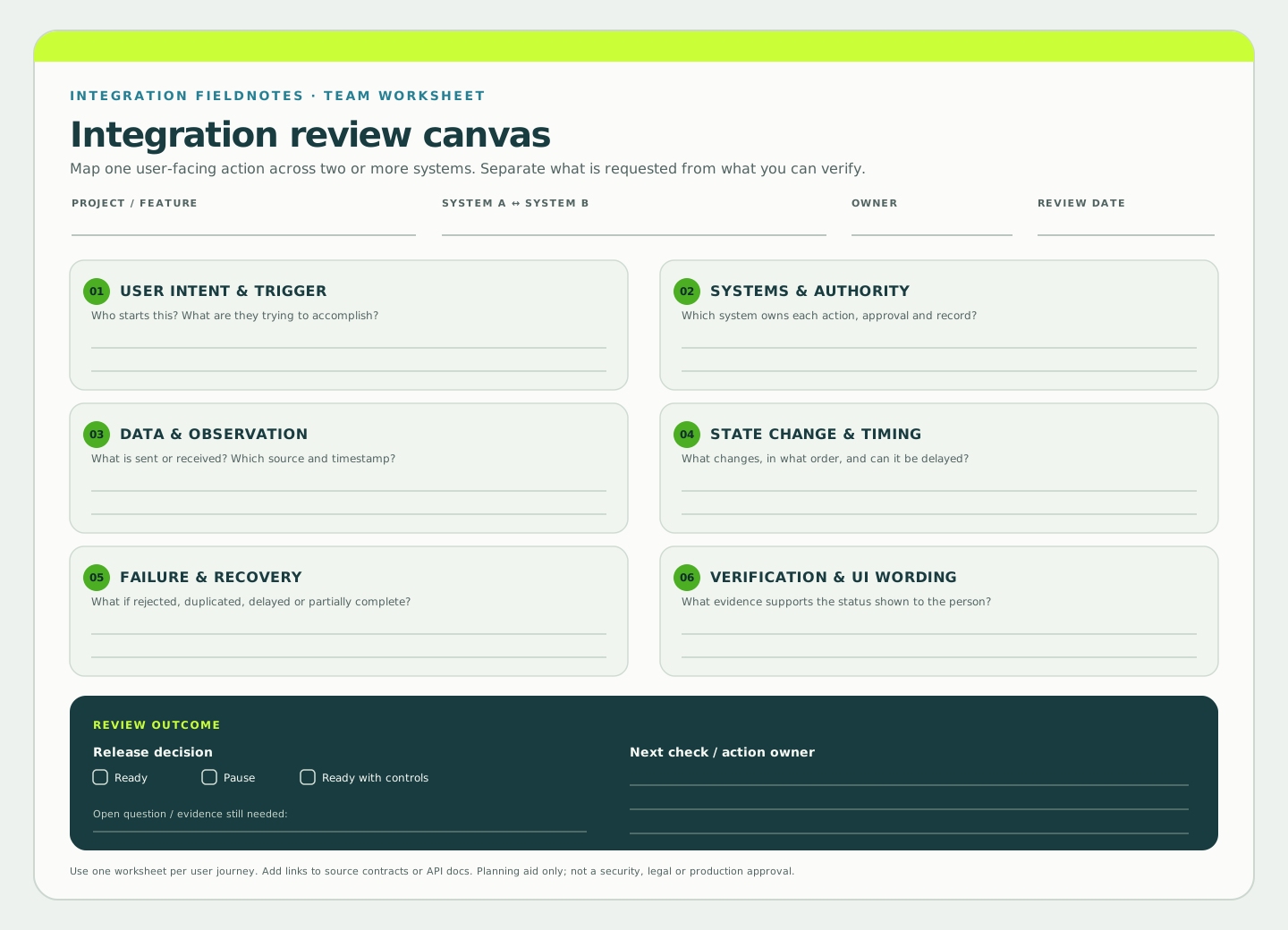
Integration review worksheet
Map an integration before you write the interface.
Capture intent, authority, data, state changes, failure recovery and verification. Includes prompts and a decision summary for a focused team review.
6 contract fieldsRisk and open questionsNext-step checklist
New case-note format
Four small studies. One practical method.
Each note examines an integration pattern through observable evidence, recovery choices and clear user-facing language.
IF—01 / Wallet stateA signature is not a staking outcome
Separate wallet approval, network submission, confirmation and account state.
Read the case noteIF—02 / Safe retriesThe reply timed out. Did the action?
Design a retry path that cannot quietly create a second payment or booking.
Read the case noteIF—03 / Event deliveryArrival order is not business order
Handle duplicate and late events without moving a record backwards.
Read the case noteIF—04 / Data freshnessEvery status has a time window
Show when an observed value is recent enough to support a decision.
Read the case note Browse all fieldnotes or visit the guide library.